The defects are there.
Someone just has to find them.
A typical new build has dozens of things wrong with it, and almost all of them are your developer’s to put right. We go through it room by room, photograph every one, and hand you a list they can act on.
- Report in
- 48h
- On site
- 2–3h
- From
- £400
- We work for youIndependent of your developer, with nothing riding on the result.
- Report in 48 hoursPhotographed, room by room, ready to send on.
- New builds onlyOne job, done properly. No surveys, no valuations.
- Across the MidlandsBased in Telford, Shropshire.
The day you complete, the problem changes hands
None of this is meant to alarm you. It is just how the process works, and it is the reason an inspection is worth more before you sign than after.
Before you complete
The outstanding item in the transaction is your signature. A photographed defect list at this point is something your developer needs to resolve to finish the sale.
After you complete
The same list becomes an aftercare request. It usually still gets done, but on their schedule, and you are the one making the calls and taking days off to let people in.
A year later
Without a dated record, the argument becomes whether a fault was there at handover or appeared since. That is not a conversation you can win from memory.
Ten areas, every room, inside and out
A non-invasive visual inspection. We do not lift floors, open up walls or test services, and we say plainly when something needs a different trade.
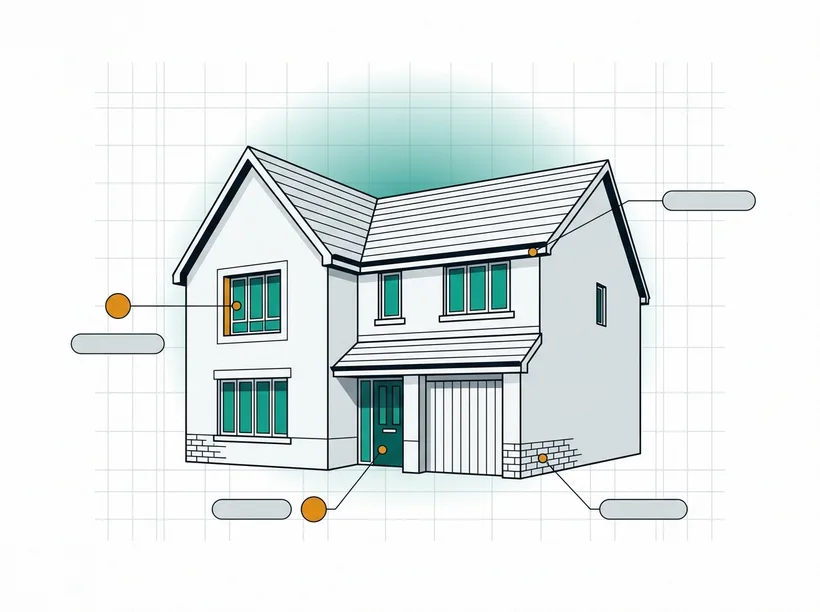
Most of what goes wrong on a new build is visible, and most of it is small. The difficulty is that it is spread across a hundred places at once, and after a day of moving in you stop seeing any of it.
We go through it cold, in a fixed order, with a camera.
Walls and ceilings
Cracking, hollow or proud plaster, poor joints, nail pops, visible patch repairs.
Paint and decoration
Thin coverage, missed edges, overspray on fittings, brush marks, damage already done.
Floors
Gaps at skirtings, lifting or drumming boards, bad cuts around pipework, uneven screed.
Doors and frames
Binding, uneven margins, latches that miss, handles loose, seals and thresholds.
Windows and glazing
Operation, locking, failed or missing seals, scratched units, trickle vents, beading.
Kitchen
Unit and door alignment, worktop joints and sealant, end panels, appliance fit and function.
A report your developer can act on
- Every room, plus the loft hatch, the garage and the outside of the property
- A photograph of every single defect we record, captioned and located
- Items ordered by severity, so the ones that matter are not buried
- Plain English on what each item is and what putting it right involves
- A report formatted to forward to your developer without editing it
- A follow-up call to talk through anything in it, at no extra cost
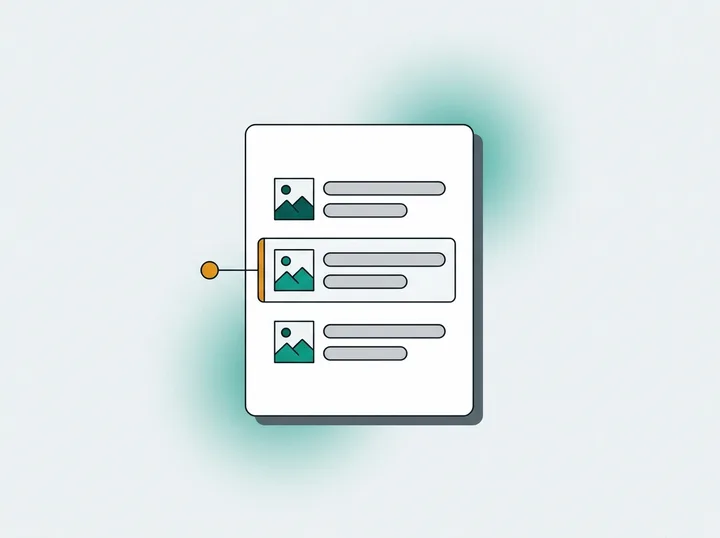
[NEEDS HARRY: this is an illustration of the report's structure. One anonymised page from a real report would be stronger still, and every competitor links a sample.]
One price per property, report included
No separate report fee, no charge for photographs, and no travel charge inside our area.
£175
Re-inspection
We return once your developer says the list is done and check each item against the original report. Competitors charge anywhere from £100 to £350 for this.
One price per property, with the report included. If the layout means the job will take materially longer we will say so when we quote, not after the inspection.
Four steps, and we do most of them
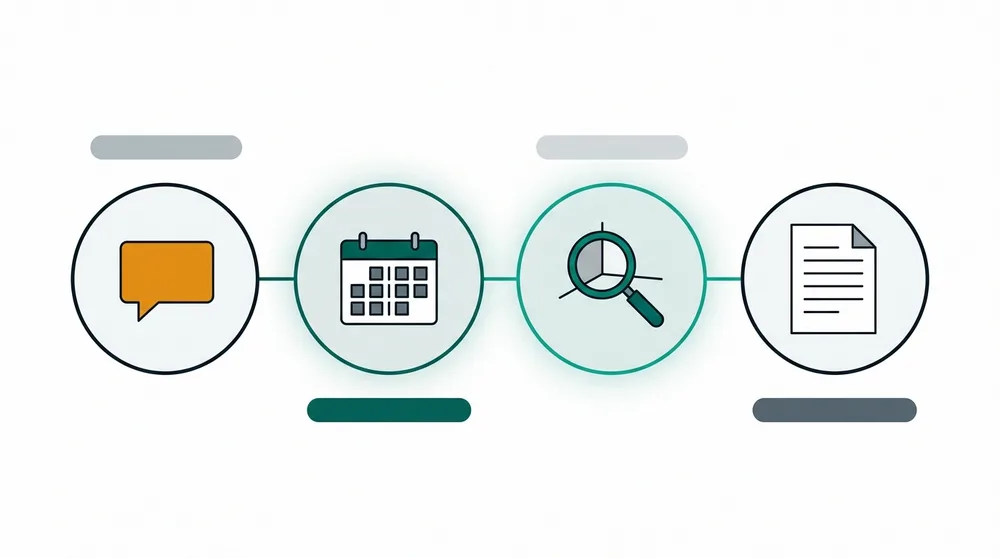
Tell us about the property
Postcode, size, your developer, and when you complete or moved in. Two minutes on the form, or send it over on WhatsApp.
We book around your date
New build dates move. We work backwards from your completion date and would rather reschedule than have you rush it.
We inspect the property
Two to three hours on site, room by room, photographing every item as we go. You do not need to be there.
You get the report, and a call
Within 48 hours. Then we talk you through what we found and which items are worth pushing hardest on.
Wherever you are up to, it is worth knowing
You have a completion date
The strongest position there is. Defects raised before you sign are something your developer needs to resolve to finish the sale, not a favour you are asking for afterwards.
You have just moved in
Still very much worth doing. Developers expect an early defect list, and one that is written down and photographed is the one that gets actioned.
You are inside the first two years
Most new homes come with a ten year warranty, and the first two years work differently from the rest: during them the developer is responsible for putting right work that falls short of the warranty provider’s technical standards (NHBC Buildmark, 2026). After that, cover narrows to structural damage. A dated, photographed record made early is far harder to argue with later than a half-remembered phone call.
Straight answers, before you spend anything
We would rather you understood the process than booked something you did not need.
When should you book a snagging survey?
The best window is after the build is finished but before you legally complete. Here is why that timing matters, and what to do if you have already moved in.
What is a pre-completion inspection, and how is it different from snagging?
A Pre-Completion Inspection is a specific right under the New Homes Quality Code, carried out on the Code’s own checklist. A snagging survey is broader. The difference matters, including who is allowed to do it.
What does a snagging survey cost in the UK?
Most UK snagging surveys fall between about £300 and £600 in 2026, depending on the size of the property. Here is what moves the price and what should be included.
What to do if your developer will not fix the snags
A photographed, dated, itemised report is the foundation. Here is the order to work through, from site manager to formal complaint, and what to keep a record of.
The things people ask before booking
What is a snagging survey?
An independent inspection of a new build home that records everything the developer should put right. We work through the property room by room, photograph every defect, and give you a report you can send straight to them. We are not inspecting the structure or valuing the house, and we have no relationship with your builder.
When should I book one?
Before you legally complete, if you possibly can. Once you have signed, a defect stops being something your developer needs to clear to finish the sale and becomes an aftercare request on their schedule. If you have already moved in, book anyway and do it soon: an early written, photographed list is the one that gets acted on.
How much does it cost?
From £400 for an apartment or two bed, £450 for a three bed, £525 for a four bed and £600 for five or more. That is the inspection and the report, with no separate report fee. A re-inspection once the work is done is £175. For context, UK snagging surveys generally run between about £300 and £600 in 2026 (HomeOwners Alliance, 2026).
How many defects will you find?
More than you expect, and that is normal rather than alarming. Published industry guidance puts a typical new build somewhere around 50 to 150 items (HomeBuyerCheck, 2026), most of them small. The number matters far less than which ones are serious, which is why our reports are ordered by severity instead of by room.
Is this the same as a pre-completion inspection?
No, and the difference is worth understanding. A Pre-Completion Inspection is a specific step under the New Homes Quality Code, carried out on the Code’s own checklist before you complete. A snagging survey is broader and not limited to that checklist. Under version 2 of the Code (March 2026), if you appoint someone to carry out a PCI on your behalf they must belong to a recognised professional body such as CABE, CIOB, ICWCI, RICS or RPSA and hold professional indemnity insurance, and a developer may refuse entry to an inspector it does not consider suitably qualified.
Get it checked before you sign for it
Send us the postcode and your completion date. We will come back with a price and the dates we have free.